
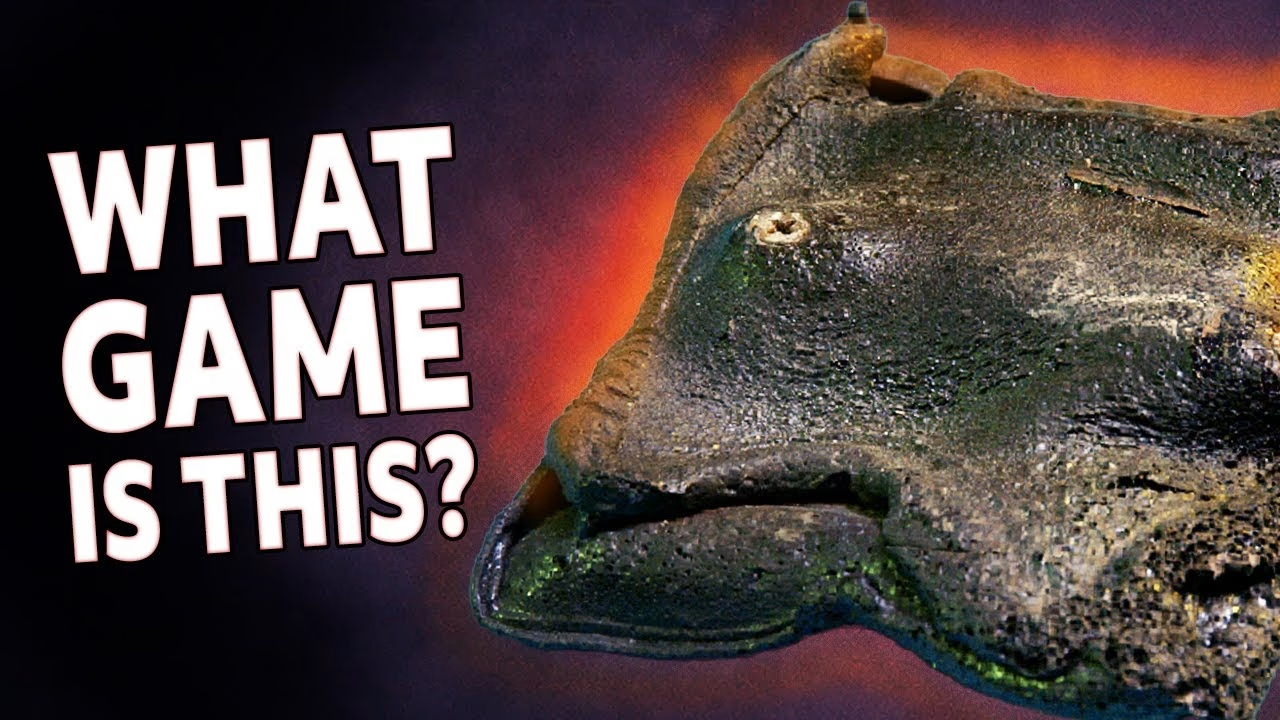
This ColecoVision cartridge was in one of the hottest parts of my house fire, and its shell had melted so badly I had no idea which game it was. The melted case may actually have protected the board, sealing it in like a protective layer. In this rescue I free the PCB, battle soot that’s baked into the edge connector fingers, and finally find out what the game is by switching it on. Then I discover why it won’t fit the new shells PCBWay printed for me. This video was supported by PCBWay.
This is the third of my fire-damaged cartridge rescues, after Carnival and a melted copy of Pit Stop, and I’ve returned to more fire-damaged ColecoVision games in later videos.
Opening the melted cartridge
Gloves on, as this stuff is toxic. From the outside, I guessed it was a short PCB with one or maybe two EPROMs. Unlike the last cartridge, the two screws came out easily with my Kaiweets ES20 electric screwdriver, so at least I wasn’t fighting metal embedded in the plastic. The case was still fused, though, so rather than cut it, I used brute force. The left side started to give, then the plastic finally snapped and launched the board halfway across the room.
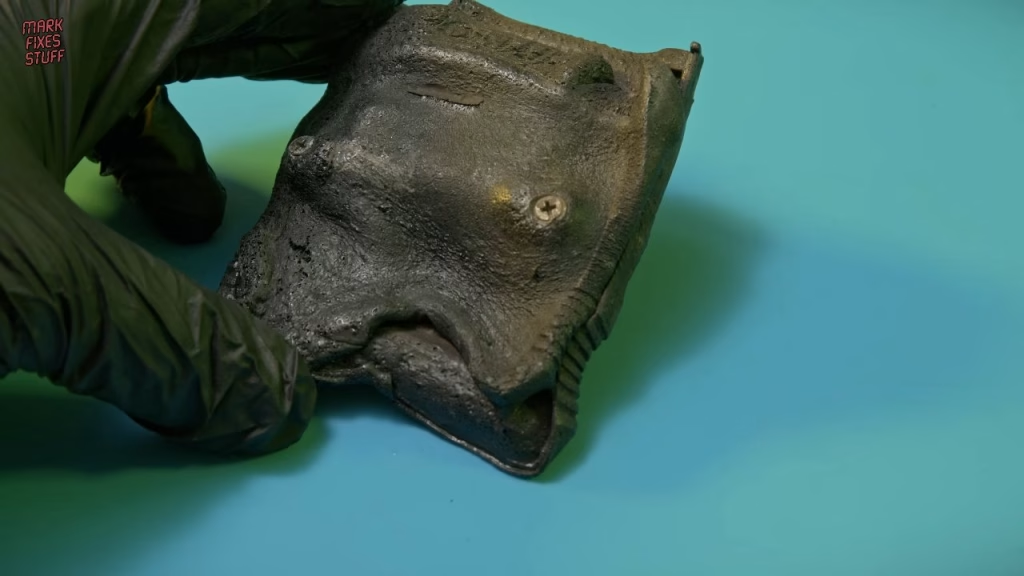
On first inspection the board looked OK. There was an Activision name and a number on it, but searching online with the chip and board details only turned up an AtariAge post from someone else asking what the game was. So the only way to find out was to clean it and plug it in.
Why won’t soot come off cartridge contacts?
The edge fingers on the front were in a really bad state, with soot pitted and burnt into the metal. The back was better, and the edge that goes into the console looked fine (I’ve had one cartridge whose edge connector swelled to twice its thickness, so this was good news). A dry cotton bud removed almost nothing, which shows how heat has embedded the contaminants. Isopropyl alcohol didn’t shift it either, though it was good for cleaning the rest of the PCB, and a silicone mat doesn’t mind 99.9% IPA. I don’t think much smoke got inside; I suspect the case melted first and sealed it.
Next I tried the edge connector cleaning tool from Rod Hull at The Future Was 8 Bit, an eraser with grit in its compound. Working one finger at a time so I could see the contrast, it made a real difference on the back, and some on the front, but not enough. A fibreglass pencil, the more drastic option, made surprisingly little difference here: the soot seemed indented beyond the reach of either tool.
Metal polish on edge connector fingers
Time for all-purpose metal polish, a powerful abrasive that I’ve used on rusty shielding and Nintendo cartridges with great results. With gloves you can apply it with a finger, and it’s best left to sit for a while so the compounds can work on the top layer. Then I worked it into the pits with cotton buds, front and back, over and over. It’s not a miracle cure and it takes elbow grease, but the muck kept coming off.
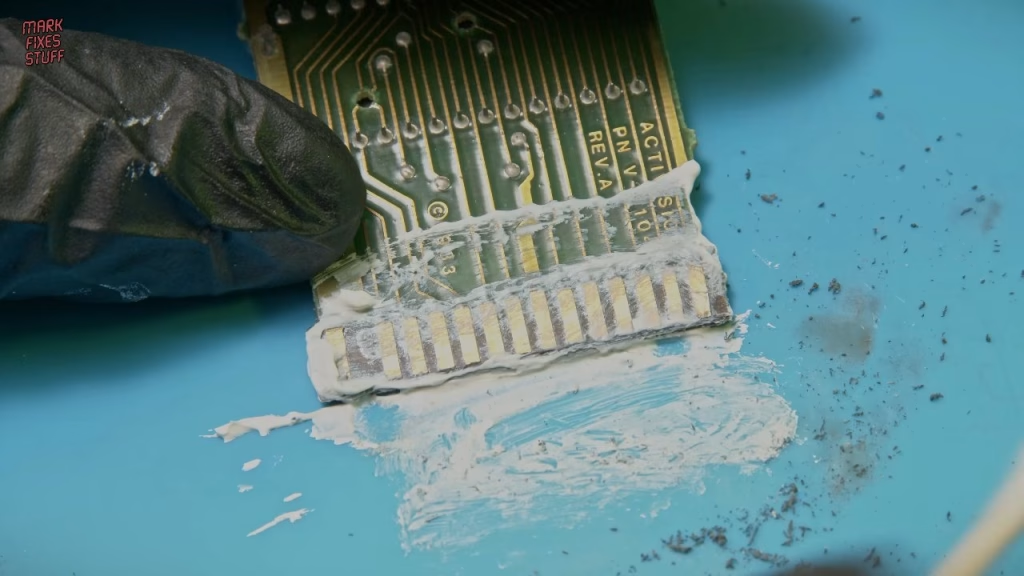
After wiping the polish off with clean cotton buds and a lint-free cloth, the back came up astounding, and the front was blinding. The polish even lifted some of the staining from the PCB material itself.
Did it work? What was the game?
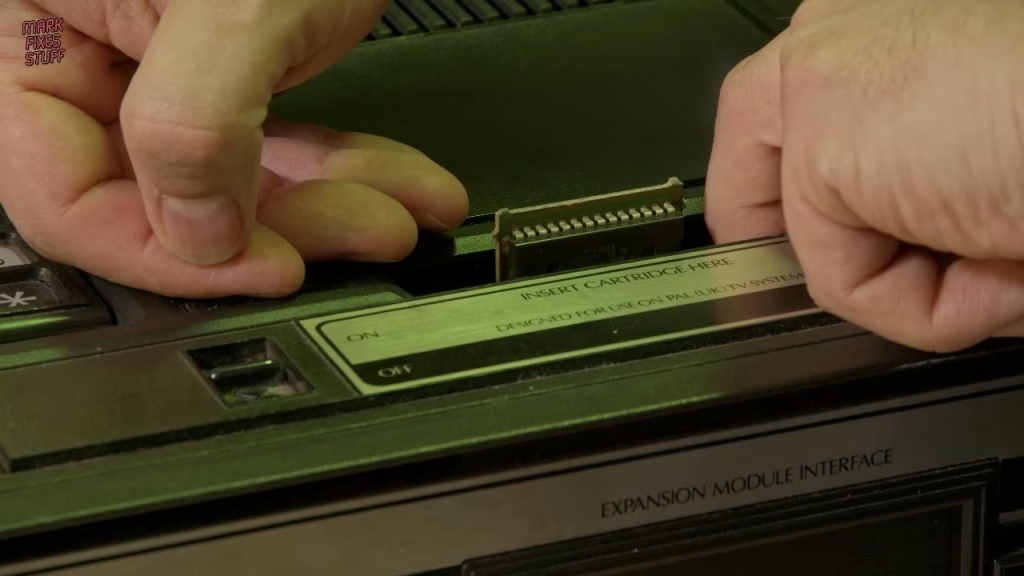
Holding the slot open on my still rather mankey ColecoVision, I inserted the board and flicked the switch. Holy guacamole: it’s H.E.R.O., and it survived the fire too. That’s a great game.
Why won’t an Activision board fit a ColecoVision shell?
Knowing this was coming, I’d asked PCBWay to print some cartridge shells, choosing their lowest-cost structural PLA since not everyone has a 3D printer, and they came out great. But try as I might, the board wouldn’t fit. Then the penny dropped: H.E.R.O. is an Activision game, it came in an Activision shell, and it’s an Activision board, something I couldn’t have known with the original shell melted. Activision boards don’t fit standard ColecoVision shells. Compare it with my copy of Omega Race, the board I’m using to reconstruct PCBs for my other cartridges, and the standard board drops straight in. As Alanis Morissette said, you live and you learn.
The Kaiweets ES20 screwdriver set I used is here, and code MFS15 gives 15% off.
More from the house fire cartridge rescues: Rescuing a Fire Damaged ColecoVision Cartridge: Carnival from 1982, Melted ColecoVision Cartridge Still Works (Sort of): Rescuing Pit Stop from a House Fire, Can Fire Damaged ColecoVision Cartridges Be Saved? Restoring Two Copies of Looping, Restoring a Fire Damaged ColecoVision Donkey Kong Junior Cartridge.
Related
Another survivor from the same fire: restoring a soot-damaged Intellivision. For more cartridge work, see changing a Mega Drive cartridge save battery.
Leave a Reply