
This Commodore 64 breadbin had lost its voice. A diagnostic cartridge pointed at the SID, so I checked the supply voltages, swapped in a known good 6581 and got the sound back. Then I tried a SwinSID Nano as a modern replacement, and it sounded awful. This video was supported by PCBWay.
Diagnosing a C64 with no sound
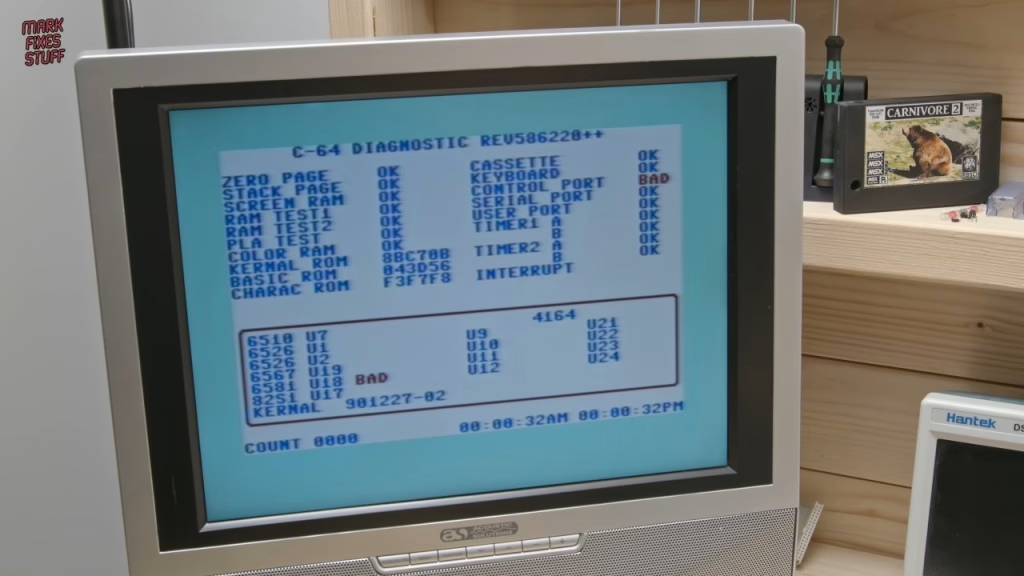
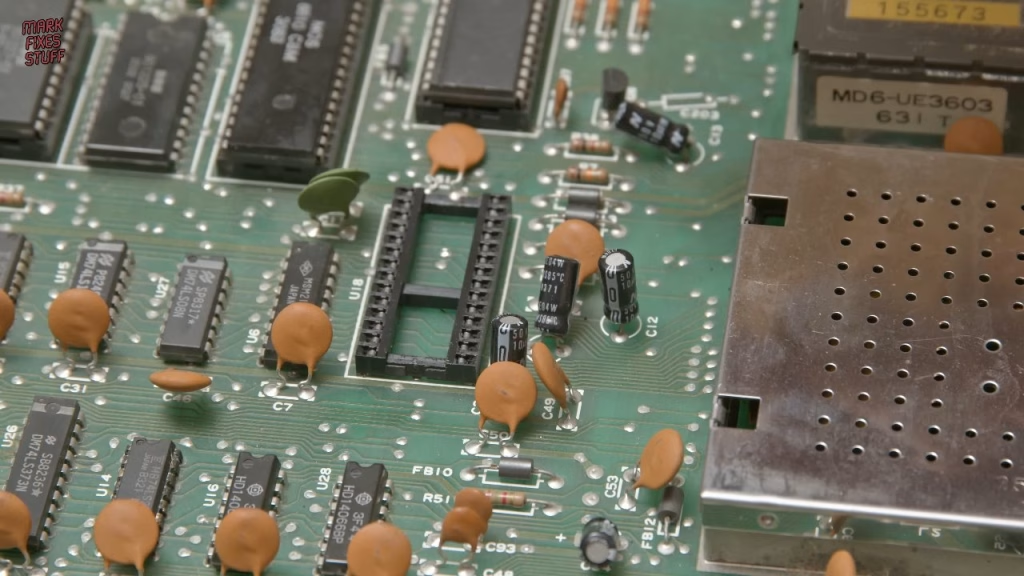
I used the Commodore 64 diagnostic cartridge and harness from Retro Rewind. This isn’t product placement, it’s just a really well made set: it tests everything, including the joystick ports and the keyboard. It reported the 6581 SID at U18 as bad, along with the control port.
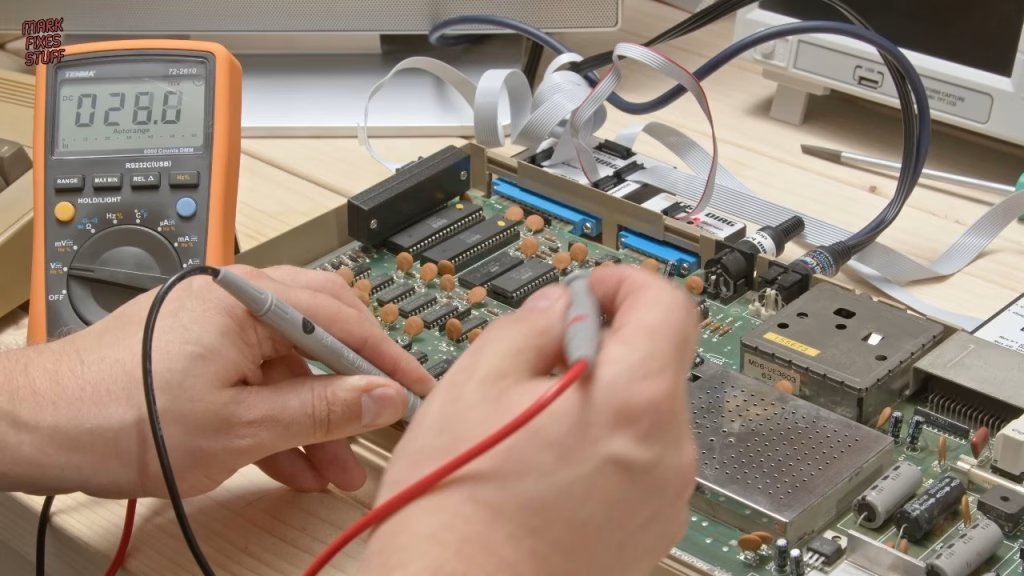
The 6581 is prone to dying, but it isn’t always the culprit, so check the supplies first. Pin 28 should have 12V; I measured just over 12V. Pin 25 should be around 5V; I got 4.6V, not ideal but not too bad. If either is missing, look at the voltage generation instead.
The control port error needs care too. It could be one of the 4066 chips (sure enough, the diagnostics then flagged the 4066 at U28), or a cracked solder joint on a port. But the SID also handles some control port functions, so a bad SID can throw false errors there.
Swapping the SID
I don’t use chip pullers (I like my pins straight), so I levered it out gently from both sides. The date code 2383 means week 23 of 1983, and the underside shows it was made in Korea. My replacement was a known working, tested genuine SID from week 24 of 1984, made in Taiwan, so if the fault persisted I’d know it was elsewhere.
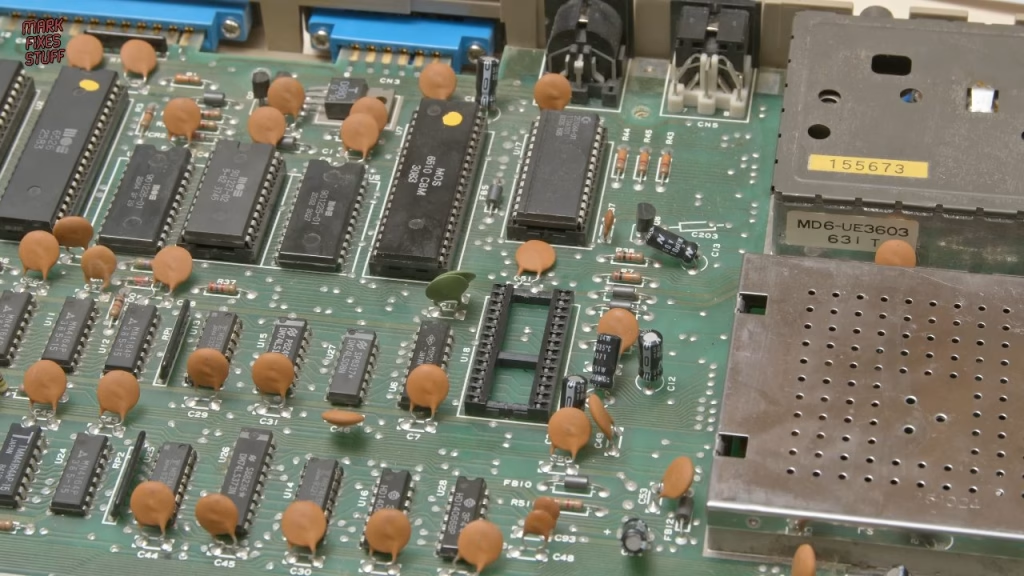
With the machine powered off, in it went. Power on, rerun the diagnostics, and every error cleared, including the control port. The C64 had its voice back.
Why does my SwinSID Nano sound so bad?
With the real fix done, I tried a SwinSID Nano I’d bought on eBay. It has a couple of jumpers (2mm pitch, which I didn’t have caps for); from what I read online they change the SID emulation and add a 1K filter. With it fitted, the control port error came back, and I don’t know whether that’s the machine or a SwinSID quirk.
For a listening test I used the Samurai Warrior cartridge I made with PCBWay’s help, a game whose music I know well. With the SwinSID Nano it sounded rubbish: extra beats, pauses and doubled notes. Putting the genuine SID back made it perfect again, and the SwinSID still showed the bad port on a second diagnostic run. Have I got a bad part, or set it up wrong? I don’t know. If you do, tell me in the comments on the video.
Did it work?
Yes: a known good genuine SID fixed both the missing sound and the diagnostic errors, and that’s what’s staying in this C64. The dead SID is now on the shelf awaiting a new purpose.
Related
More Commodore 64: a £40 local C64 pickup, building an Epyx FastLoad cartridge and the Kung Fu Flash review.
Leave a Reply