
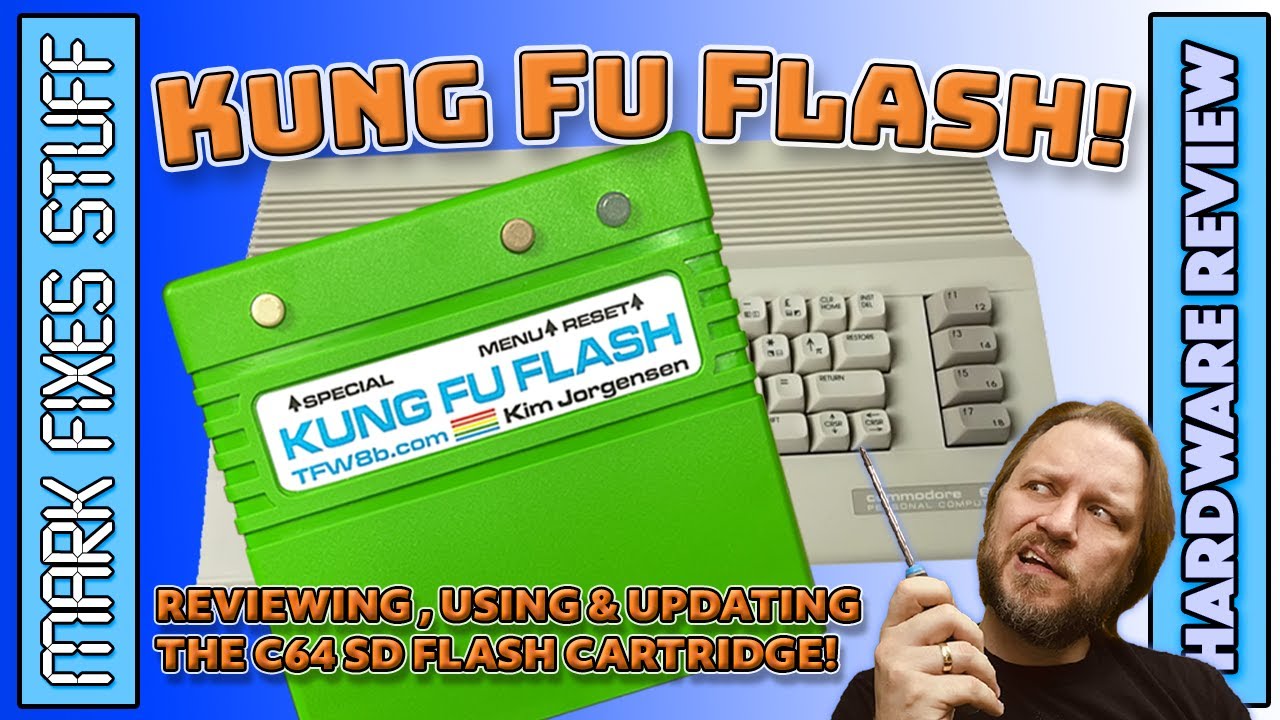
The Kung Fu Flash is an open source cartridge emulator for the Commodore 64 by Kim Jørgensen, and this is the retail version made by The Future Was 8 Bit. It simulates a huge range of cartridge types and even has limited PRG/P00 and disk image support. So does it make the SD2IEC and other devices obsolete? I open it up, test the functions, play some games and update the firmware. This video was sponsored by PCBWay.
- The Kung Fu Flash is Open Source Hardware and can be found at Kim’s GitHub here: https://github.com/KimJorgensen/KungFuFlash
- You can buy the lovely premade version from TFW8B here: https://www.thefuturewas8bit.com/kung-fu-flash.html
Inside the Kung Fu Flash
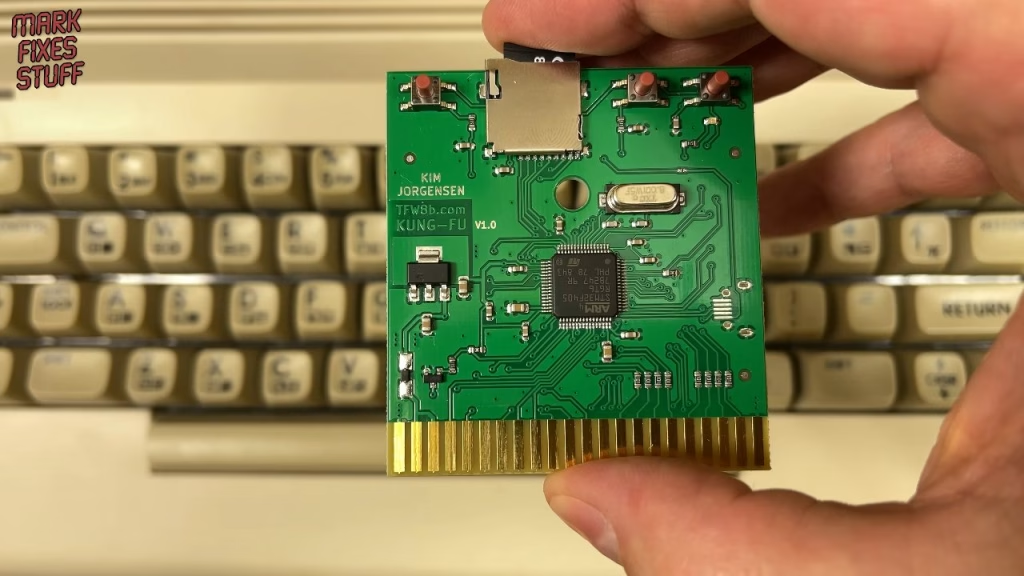
My first impression is that it’s really well made. The case is held together with a single, very stiff screw, and even with that out it takes some effort to separate. Inside is an equally well made PCB built around an STM32 ARM chip from the 405RG series, running at 168MHz with 1MB of 32-bit flash. There’s a 3.3V regulator, an 8MHz crystal, buttons, passives, a microSD slot and a spot for an optional USB port for EasyFlash use (a modified EasyFlash utility is on the GitHub page). The back has only programming header pads.
Is the edge connector safe for your C64?
Poor quality or badly sized edge connectors can damage a computer’s cartridge slot, so I checked. I was very pleased to see it matches a vintage original cartridge, and the board looks to be a better quality material too. It slides firmly into the expansion port with a very solid fit.
Setting up and using the menu
Storage is a FAT formatted SD card. TFW8B supplies a pre-formatted card with freeware already installed, plus files for their other products that you can delete once you know what you need. There are three buttons: reset, menu and special, which is reserved for emulating carts with a freezer or halt function. I used my Mega Drive to C64 pad adapter from an earlier build so I could use my favourite joypad safely.
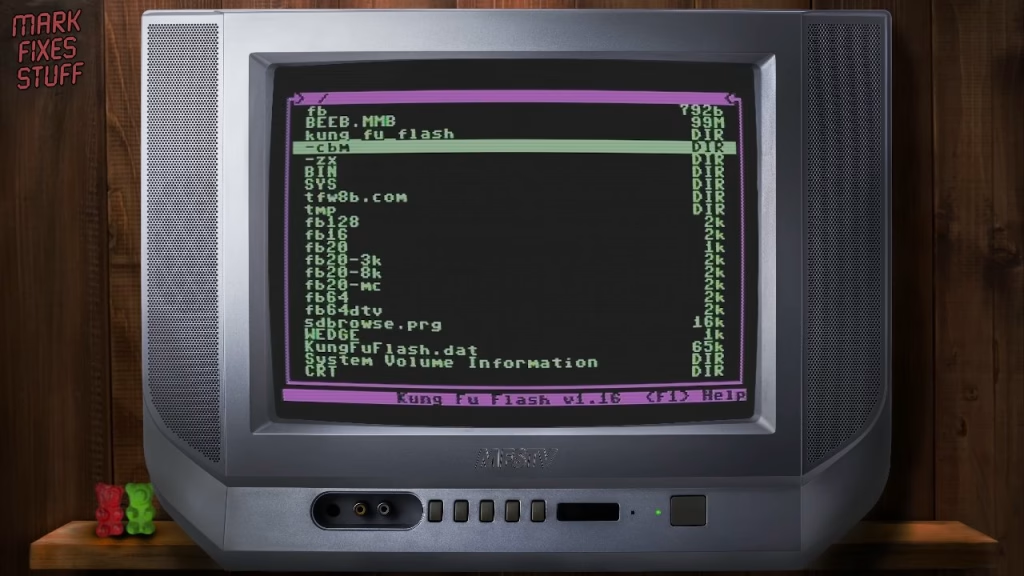
The very first time you power on you get the file browser. After that, the cart boots straight into whatever you last loaded into flash. Cursor up/down moves through the list (shifted to go up), cursor left/right pages forward or back, DEL goes up a directory, HOME goes to the root, RETURN enters a directory or runs a file, and F1 shows help. Or, if you’re like me, use a controller in port 2 and be lazy.
Testing D64 disk images
D64 support is limited, but on a flash cart it’s a bonus. The Kung Fu Flash can’t handle original disk images or fast loaders, so you’re relying on old cracked versions. Altered Beast (a terrible game on the C64) showed how mixed that can be: three crack menus later it simply didn’t work, which was arguably a blessing. Axions, a budget shooter from Alternative Software, loaded quickly and played fine, though the game itself is incredibly repetitive.
Testing PRG files
One crack of Gremlin Graphics’ Avenger got stuck on a blue screen, but a version from a different crack group loaded straight away (I couldn’t get the controls working properly, which isn’t the flash cart’s fault). Auf Wiedersehen Monty loaded after a lengthy crack intro and played great, with amazing music.
Testing CRT cartridge files
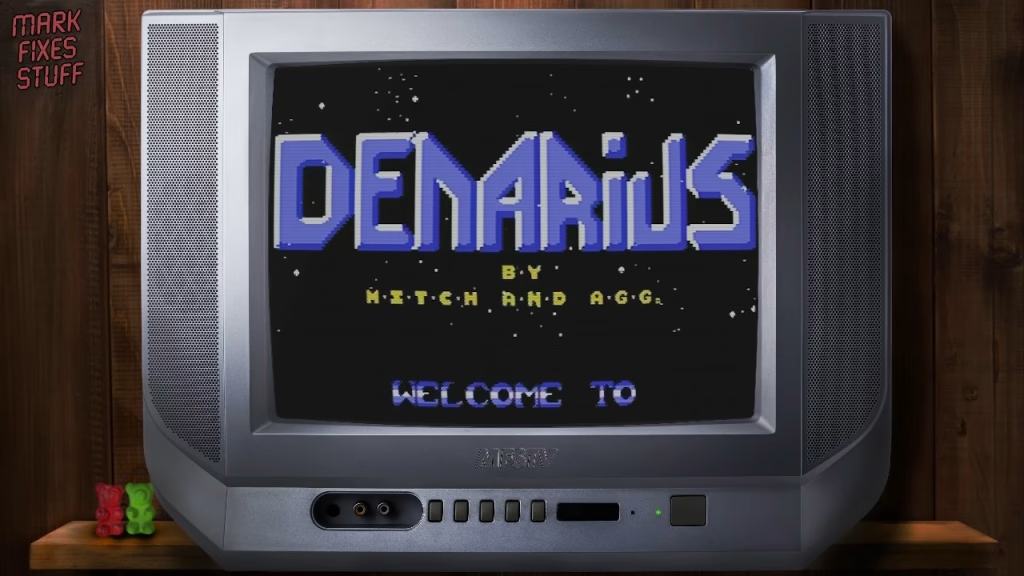
This is where the Kung Fu Flash shines. The Sacred Armour of Antiriad loaded really quickly from a QuickLoad formatted CRT file, and Denarius loaded in real time, pretty much instantly. I played Denarius on my C64 as a nipper, and my skills have clearly been lost to the passing of time. Every cartridge file type I tried worked without a hitch, and I ended up playing for a few hours. More games are being converted to CRT all the time, including some amazing modern titles.
Updating the Kung Fu Flash firmware
Updating is simple. Download the latest update for your region from the project’s GitHub (I needed PAL; the NTSC firmware was still in beta at the time), copy it to the SD card and run the UPD file on the C64. It warns that you’re upgrading and shows the version, takes a blink of an eye, and returns to the menu with the new firmware version shown at the bottom of the screen.
Verdict: does it make the SD2IEC obsolete?
Not entirely, because PRG and disk support isn’t complete. But that isn’t really the point of this device and it’s a nice extra. The ease of using CRT files alone makes it a must buy for me: it brings really speedy loading to the C64, something that had been missing for me until now. A definite thumbs up.
Related
See my Mega Drive to C64/Amiga joypad adapter build, the Epyx FastLoad cartridge build and SD2IEC speed test, and the Tapuino virtual C64 datasette build.