
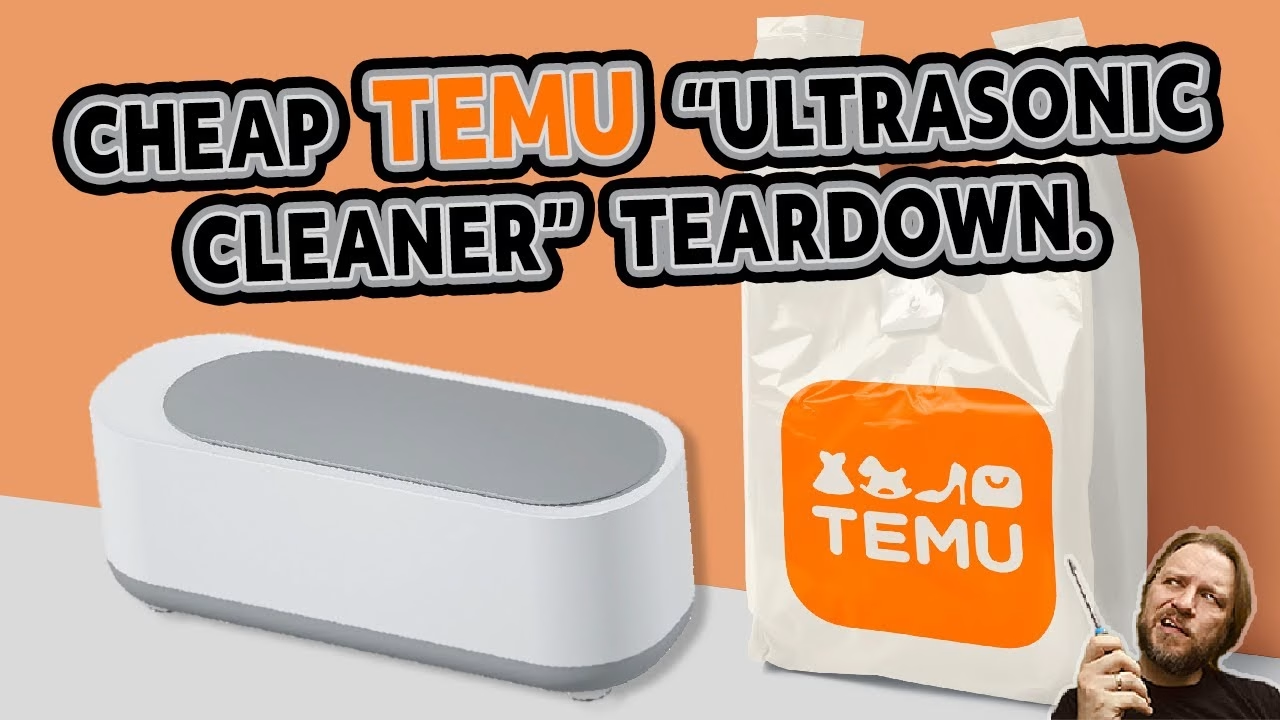
Can you really buy an ultrasonic cleaner for £2.72 delivered? I bought one from Temu to find out, fully expecting it not to work, then put it through a simple cleaning test and tore it apart to see what’s inside. Short answer: it isn’t an ultrasonic cleaner at all. This video was supported by PCBWay.
The warning signs before it’s even switched on
The listing itself barely mentions ultrasonic cleaning, and the feature graphic shows something that looks like AI art trying to draw a motor, not a transducer. Then there’s the power: two AAA batteries, so 3V in total, when real ultrasonic cleaners draw a lot of power. And the cleaning chamber is plastic, sized for a pair of glasses. That’s a bad sign in itself, because cavitation erodes plastic, which is why proper tanks are stainless steel and why you shouldn’t really put plastics in one.
For reference, a real ultrasonic cleaner uses transducers to vibrate the fluid at typically 40 to 45kHz. That creates tiny bubbles that rapidly expand and collapse (cavitation), producing very high local temperatures. Because the bubbles are so small, the overall heating effect on the fluid is minimal. Genuine cleaners this size exist, but they cost more like £30 to £40, because transducers aren’t cheap.
The spoon test
I chose a deliberately easy test: a slightly stained spoon that any genuine ultrasonic cleaner would clean almost immediately, and that I could mostly clean with my thumb. I filled it with tap water and ran it for five minutes first to degas the water, which is what you’d do with a real unit. The water vibrated convincingly, not unlike my actual ultrasonic cleaner, so for a moment I wondered if I’d misjudged it.
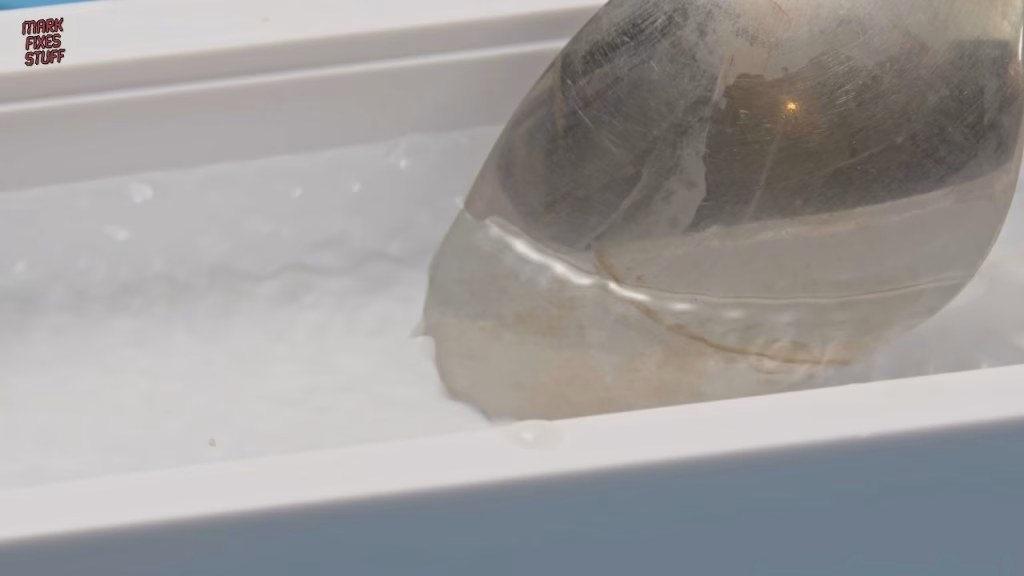
I hadn’t. With a real cleaner you see plumes of filth lifting off whatever you put in. This just made a racket. After five minutes the spoon was unchanged. My thumb was more effective.
What’s inside a £2.72 ultrasonic cleaner?
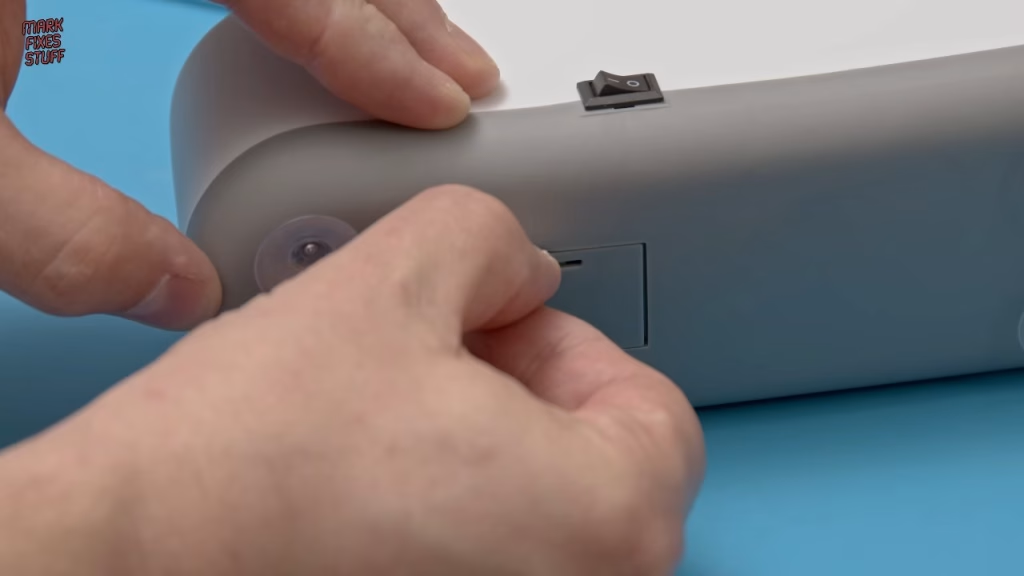
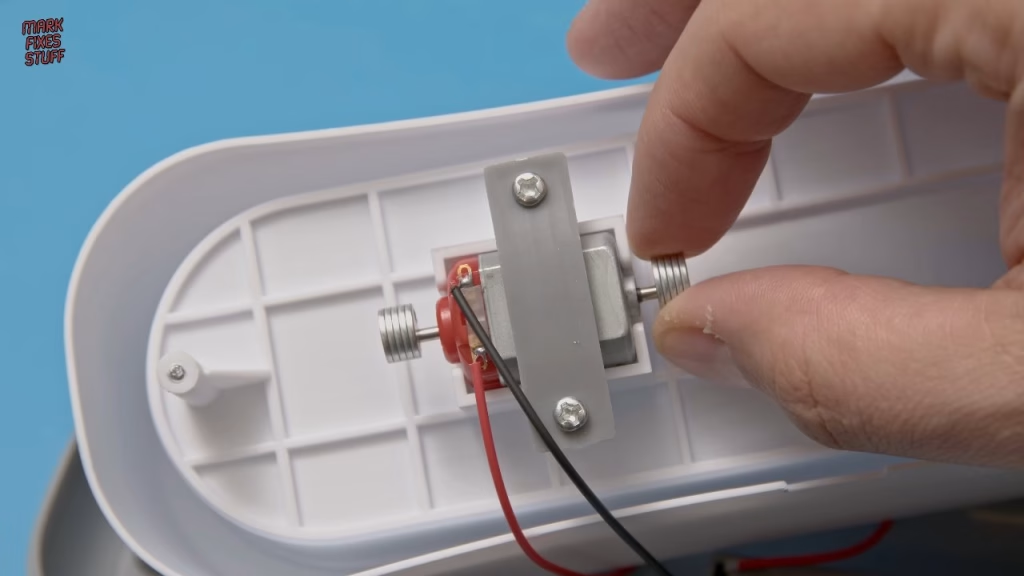
It started falling apart as I emptied it: the head of one screw had dropped off. Inside, rather than a 40 to 45kHz transducer bonded to a steel tank, there’s what looks like a cheap 3V vibration motor from a budget game controller. It’s designed only to shake the case. It’s not an ultrasonic cleaner, it’s a water wobbler, and I’d call that dishonest by design.
I bought it knowing it couldn’t work, because a few people had told me they were thinking of buying one. Plenty of people won’t know, and these are designed to catch them. The same items appear on Amazon and AliExpress too, and the lack of transparency about where and by whom they’re made is worth thinking about.
A small win: the switch
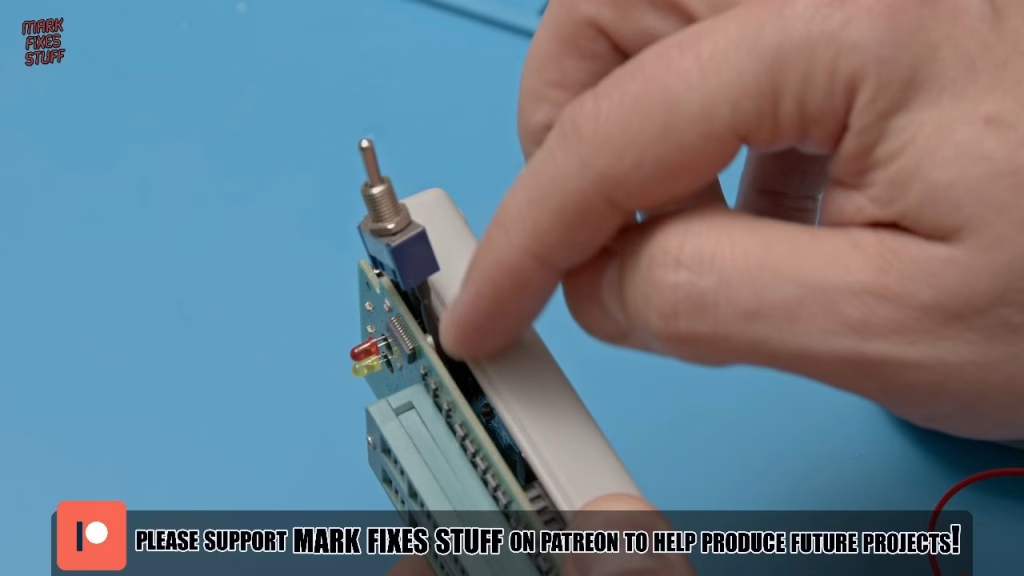
There is one useful part. When I modified my EPROM programmer to program 21V EPROMs (for my failed Atari 2600 cartridge attempt), I had to fit a huge toggle switch, and there’s little room in the case. A bag of 30 tiny switches would have cost nearly £8. The small switch from this cleaner is exactly the right size, so it’s going into the programmer. Quite a few people have asked how I did that mod, so a video on it is planned. The screwed in rubber feet and the 3V motor might find a use too.
Verdict
Don’t buy one expecting it to clean anything. Small ultrasonic cleaners do exist, just not for £2.72. Look for a stainless steel tank and something powered from an AC adapter, or perhaps USB, not a pair of AAAs.
Related
See the tools I actually rely on in my top 13 tools for fixing stuff, and more EPROM work in making an EPROM adapter and burning Amiga Kickstart ROMs.
Leave a Reply