
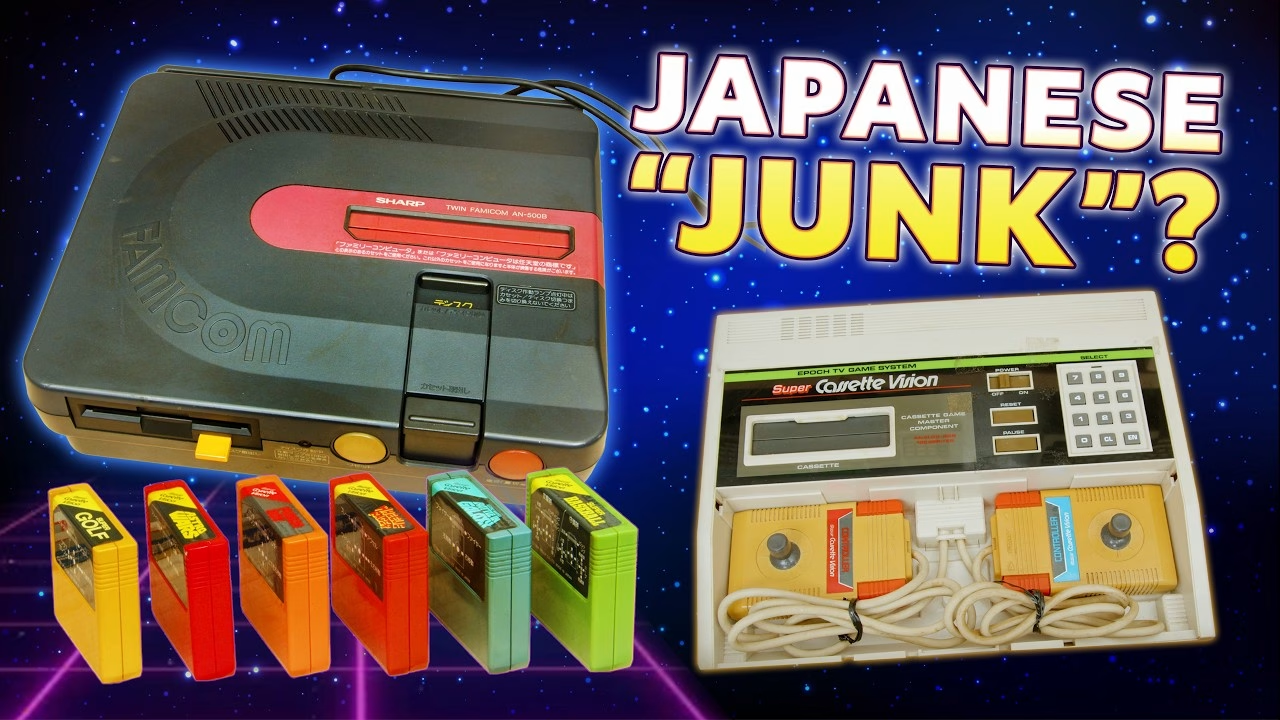
Some retro hardware is almost impossible to buy from the UK at a sensible price, and Japanese consoles are top of that list. So I used JPfans, a Japanese proxy shopping service, to buy an Epoch Super Cassette Vision, six Super Cassette Vision cartridges and a Sharp Twin Famicom sold as non-working junk. This box isn’t just a haul: it’s the starting point for several repair and preservation projects. This video was made in collaboration with JPfans.
How does buying through JPfans work?
JPfans is an independent company that acts as an intermediary between you and Japanese marketplaces and sellers. I chose the items, waited for them to arrive at the JPfans warehouse, checked the inspection photos, and then arranged combined shipping. The useful part is that you can order from several different sellers, let everything collect at the warehouse, and ship it all in one parcel. It really shines for items that are hard to get hold of outside Japan.
First impressions were good: everything was surrounded by plenty of bubble wrap, and the packing was clearly done by someone who understands that the box can matter as much as the system inside it.
The Epoch Super Cassette Vision
While we had the ColecoVision, Intellivision, Sega, Nintendo and Atari in the UK, the Super Cassette Vision sits in that early to mid-80s Japanese console space that I find really fascinating. Despite the name, it’s cartridge based rather than tape based. The box is fairly wrecked and the flaps are old, so I opened it gently, but it’s still lovely to have for display.
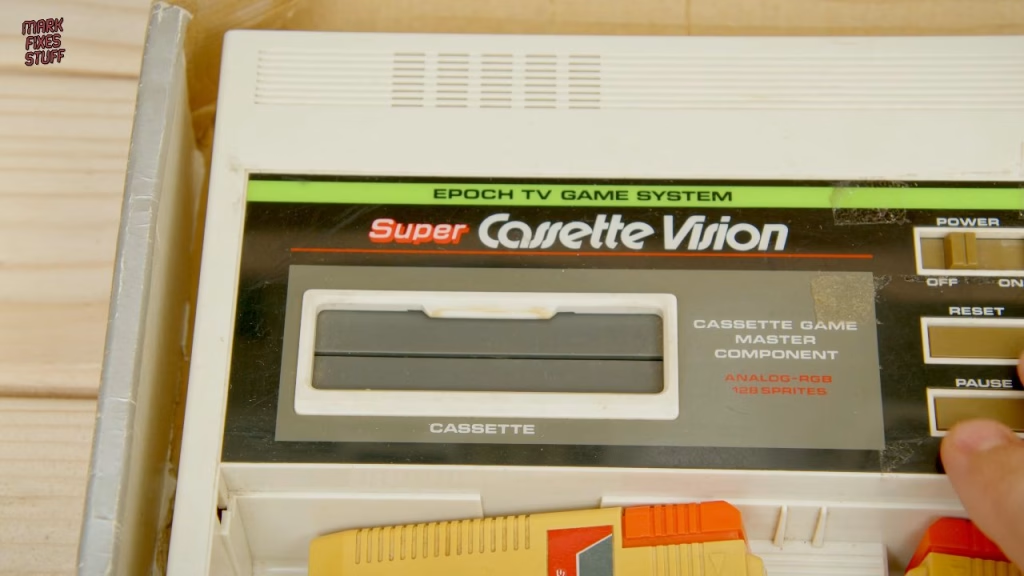
The alarm bells started ringing straight away: there’s suspicious tape residue around the buttons, so if the console doesn’t work, that’s where I’ll start looking. The controllers are a big step forward from the Intellivision and ColecoVision. For a start they actually fit in your hand, and the number pad lives on the console rather than on each controller. I love that the second pad has a blue label. They’re a bit grotty but should clean up nicely. There’s also meant to be a cover for a compartment on the console, and that’s gone missing, so maybe I can 3D print something.
RGB output: why it matters in the UK
The connections on the back are helpfully labelled in English: a barrel connector for the AC adapter, an RGB connector and an RF output. The Super Cassette Vision was an early example of a console with RGB output, which is great news, because equipment that will tune into Japanese RF is rare in the UK. The RF output is pretty useless to me, so I’ll need to make an RGB cable.
The console cost a base price of £37.37, and it’s not something I could have found on eBay for that. As a bonus, it was packed with a local Fukushima newspaper, which I always love finding in parcels from around the world.
Six Super Cassette Vision cartridges
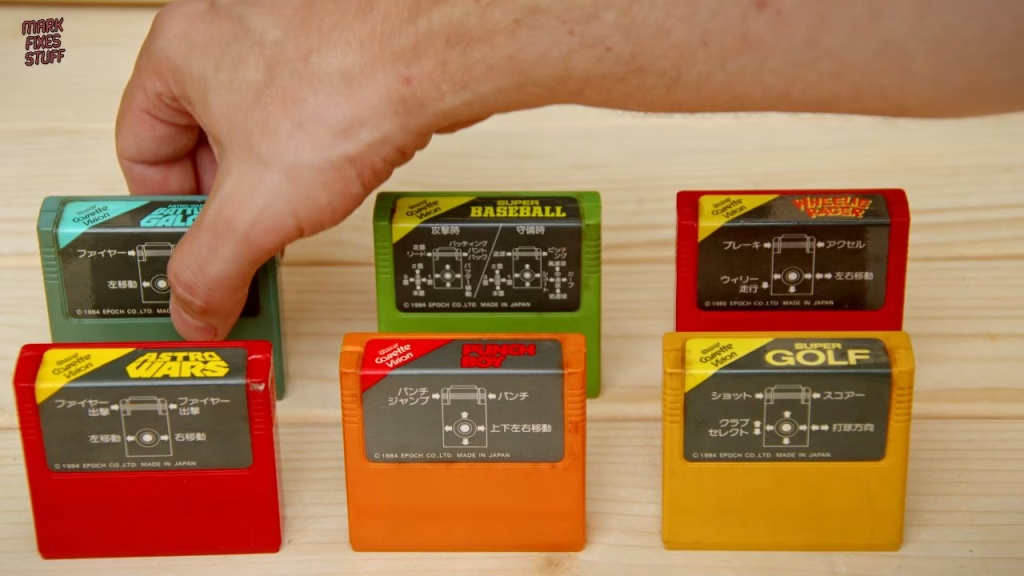
Next out of the box were six cartridges for the system. Again, these are a pain to get hold of in the UK and tend to command a premium when they appear on eBay. I paid £28.99 for all six (shipping and JPfans fees come on top, but it was still a bargain). The shells are all different bright colours, and the games are Astro Wars, Astro Wars 2, Battling Galaxy, Super Baseball, Wheelie Racer, Punch Boy and Super Golf.
The bigger story: games from my house fire
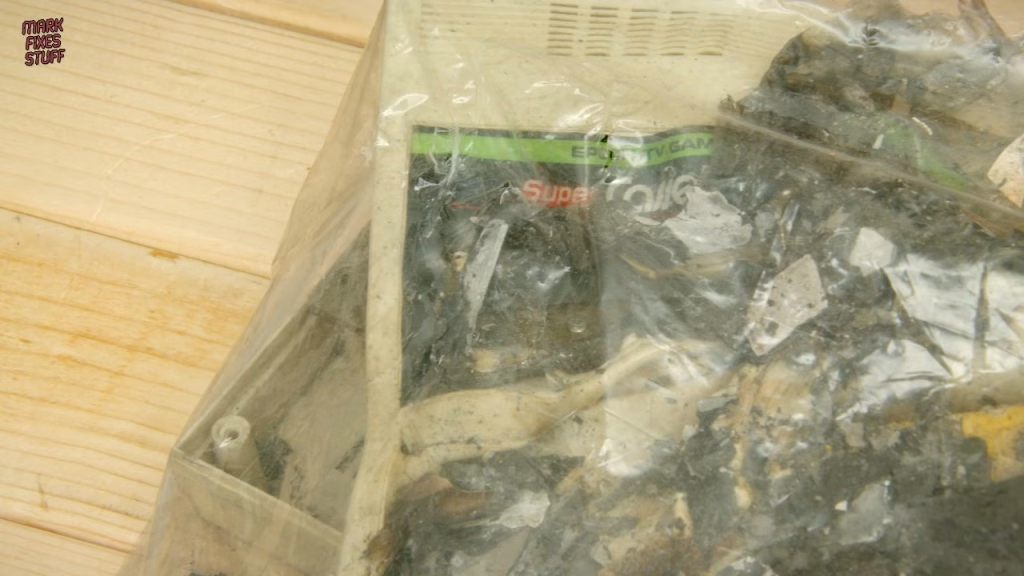
I don’t really need new cartridges to test the system, but they’re only part of the story. I also have a bag of Super Cassette Vision victims from my house fire. That console and its games belong to Neil from The Retro Collective, and they were at my house when it burst into flames. Neil said not to worry about it, but I couldn’t leave them in the skip. The new console and carts will give me a known reference while I try to save some of the burnt items.
A Sharp Twin Famicom sold as junk
The last item is something more people in the UK will recognise, even though it was never sold here: a Sharp Twin Famicom. It was listed as non-working junk, but it was still packed well, and even with fees it was a massive bargain compared with eBay. It’s grubby (some people say patina, I say finger gravy), with some wear and tear, but nothing a good wash shouldn’t sort.
The Twin Famicom combines a Famicom and a Famicom Disk System in one unit. The disk drive will likely need servicing, and I don’t have any of the disks anyway. That’s where the next project comes in: the FDSKey, a small self-contained unit with its own display that lets you run Famicom Disk System images as if they were the original disks. Running from an SD card is better for preservation than wearing out the original media, and it’s going to involve some of the smallest soldering I’ve ever done on the channel.
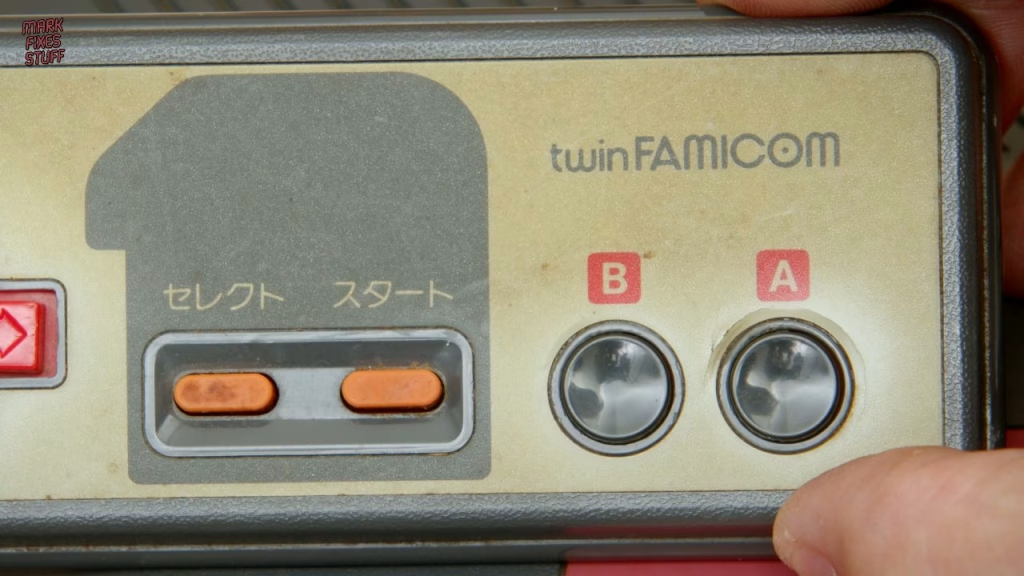
AV options on the Twin Famicom are limited. There are composite RCA and audio outputs, plus another output that only seems to do RF, which is a shame.
Was the JPfans haul worth it?
I’m really pleased. Everything arrived well packed, the prices were far better than I’d see on eBay in the UK, and I now have two projects lined up: getting the Super Cassette Vision working (and using it to help recover the burnt games), and fitting an FDSKey so I can run Famicom Disk System software on the Twin Famicom. JPfans gave me an affiliate link, and registering through it gets you 8 shipping coupons worth $86 plus 50% off Mercari items: sign up to JPfans here.
Related
For another console rescued from my house fire, see restoring a soot-damaged Intellivision with a Pi Pico multicart. And if you like the idea of running disk-based games from an SD card, have a look at installing the XStation ODE in a PlayStation.
Leave a Reply