

I never thought this day would come. A mystery box from Ian Stonelake turned out to contain my unicorn: a boxed Miles Gordon Technology SAM Coupe, the British 8-bit computer from 1989, with two disk drives, expansions, original paperwork and a heavy folder of newsletters. This is the first look, and the start of a series on getting it checked over, working, and trying modern add-ons. This video was sponsored by PCBWay.
The mystery beige boxes
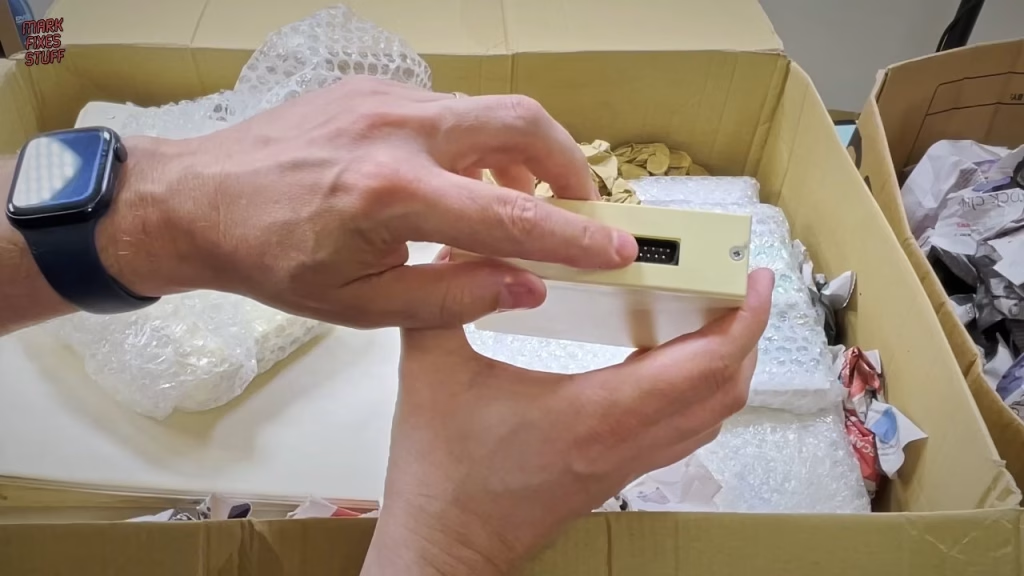
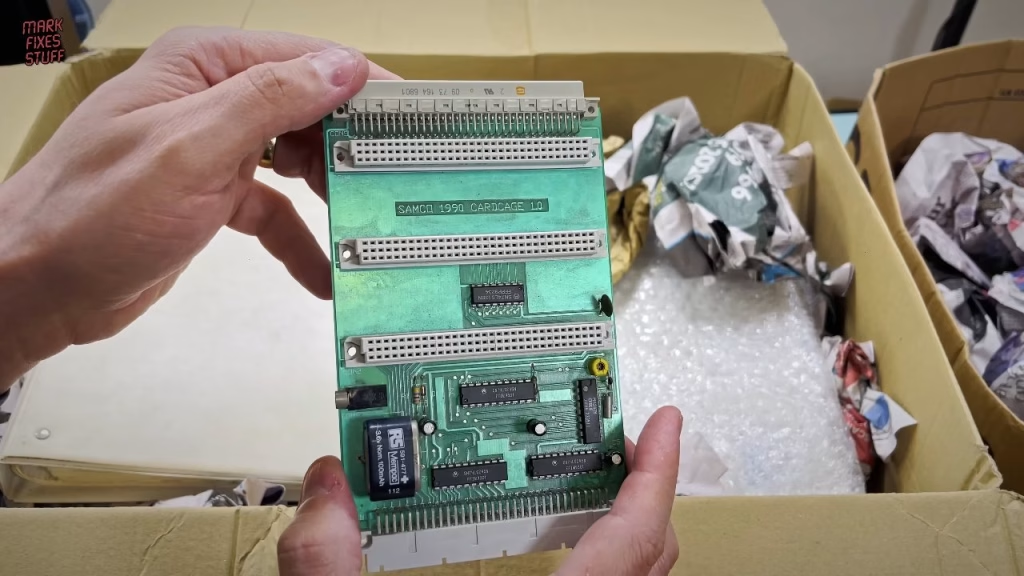
Before the main event, there were a couple of very beige units with no markings or serial numbers. One has a couple of ports and what looks like an interface for the computer; another has the same interface but no holes at all, so it’s probably self-contained and will need opening up. There’s also a bare PCB assembly with mating connectors for those interfaces, which I’m guessing is an expansion board to let several things share the bus. It has a coin cell battery and a clock chip, so it looks like it includes a real-time clock. Identifying all of these is a job for later.
Newsletters and 1989 paperwork
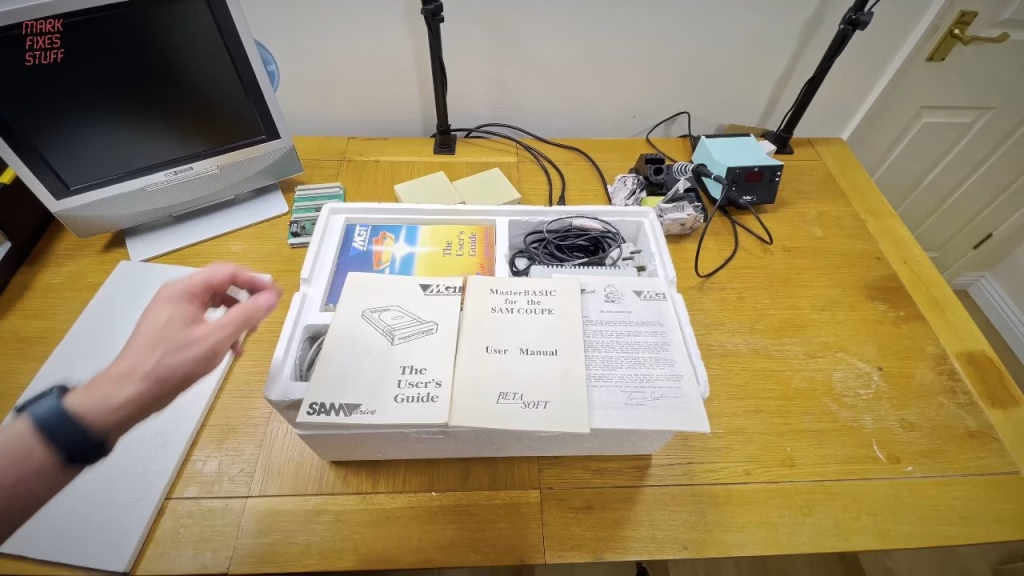
The heavy folder is full of newsletters about the system. Whoever owned this was serious about the machine, and a lot of it will be helpful for some modern upgrade ideas I have. Then the SAM Coupe’s own carton, with the ports listed on the outside and, to my surprise, the original polystyrene. Inside: original paperwork from 1989, a nicely laid out manual, a couple of cassettes (at least one recorded over a SAM pack-in tape), a grey mono cassette lead, and a combined power supply and RF modulator. The RF and power cables have some polystyrene burn, which isn’t a massive problem, but bag your bits, retro friends.
A SAM Coupe with two drives
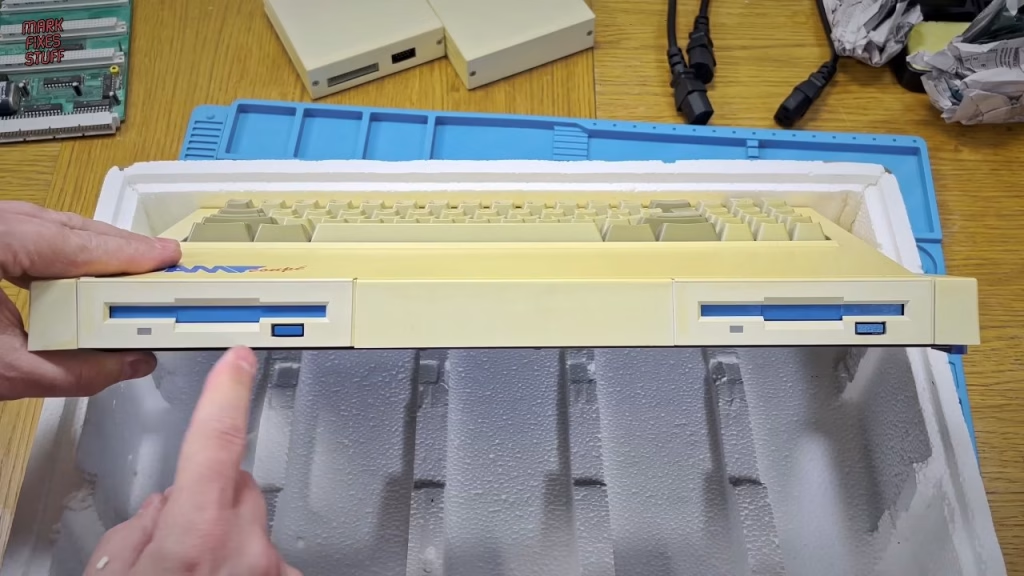
And then the reveal: a SAM Coupe with not one drive but two. It’s yellowed, but that’s its age showing. Round the back is a row of ports that would put even an MSX to shame. As a kid I saw these hyped in Spectrum magazines and badly wanted one, but I’d never even touched one until now. Because they were a commercial failure they really are rare, so it gets treated with respect.
What happens next?
I haven’t powered it on yet. Both drives are likely out of action due to age, and before plugging in I want to check the output of that power supply and modulator combo. Then it’s a proper series: checking it over, getting it working and exploring modern add-ons. Ian, honestly, thank you. You’ve made my year.
Related
The series continues with SAM Coupe floppy drive repair: replacing the belt and capacitors.
Leave a Reply