
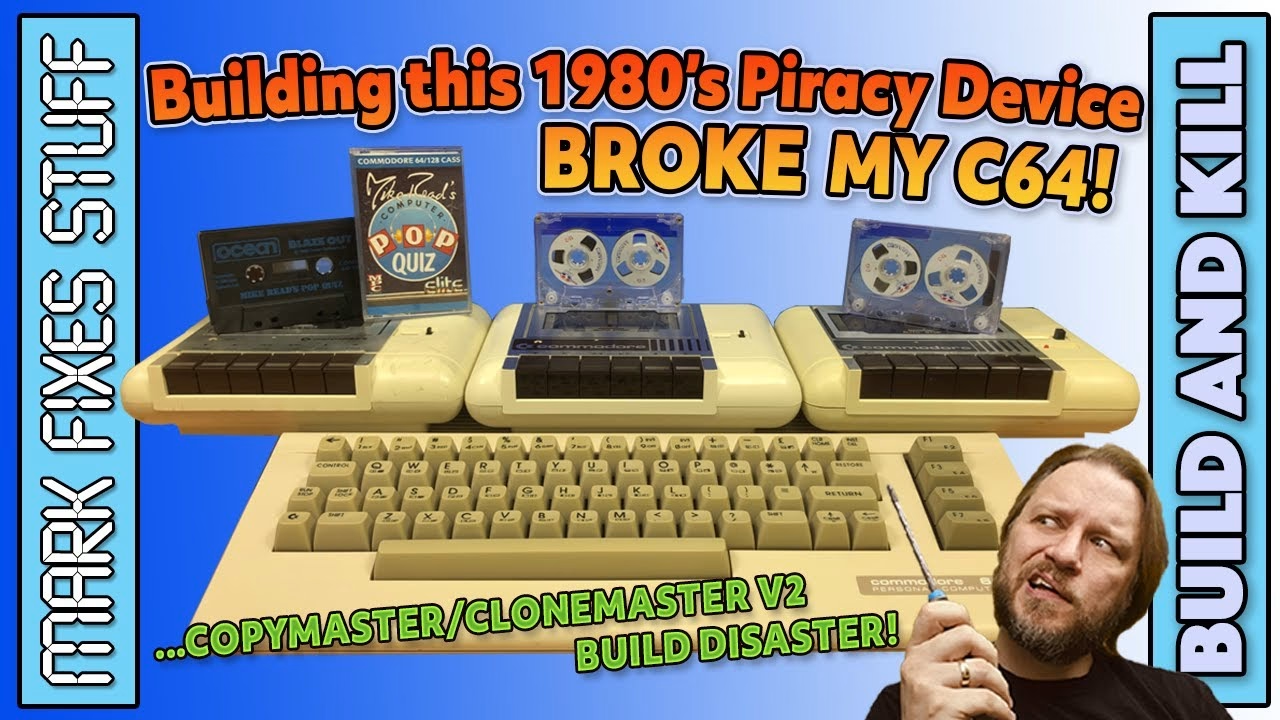
Commodore 64 tapes were tricky to copy if you were a playground pirate in the 80s. The Clonemaster V2 (also known as the Copymaster V2.0) by C64iSTANBUL is a three-way splitter for Commodore Datasettes: it cleans up the signal from one master deck and pipes it to two recording decks. It’s a really simple build, and I still managed to blow a fuse in my C64 with it. This video was sponsored by PCBWay, and you can order the board from the Clonemaster V2 project page on PCBWay.
Clonemaster V2 parts list
- The Clonemaster V2 PCB
- A 74HC14N Schmitt trigger hex inverter
- A 220µF capacitor (I used a Panasonic 16V part)
- An LED (the bill of materials says red; I used a blue one I had to hand)
- A 680 ohm resistor
- Header pins
- A 6/12 way edge connector to plug into the C64’s cassette port (easily found on eBay)
Building the Clonemaster V2
After cleaning the board with IPA and a soft cloth, the 74HC14N went in first. I’d tested it in my EPROM programmer, so it went straight into the board. The solder took really well: after many viewers recommended it, I’d bought some Kester solder, and I’d also bumped my tip temperature by 10 degrees to 340°C, which really helped. Thanks for the feedback.
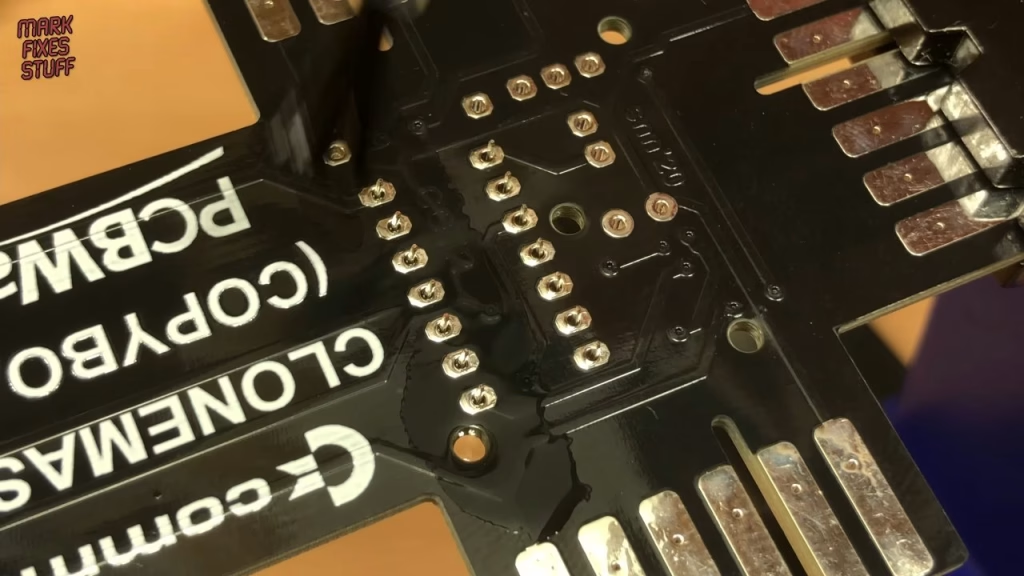
Then the 680 ohm resistor and the 220µF capacitor, long positive leg into the hole marked plus, trimmed with flush cutters. The LED follows the same rule; don’t take too long soldering LEDs or they can melt. Next came what I called the mystery header block, held with Blu Tack while soldering. I should have looked up what it was for. More on that shortly.
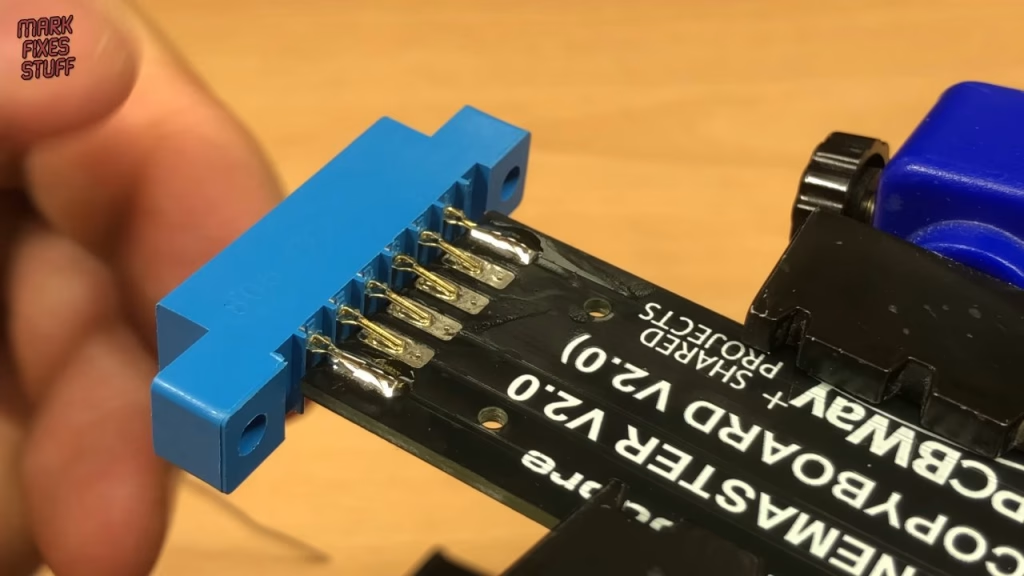
For the edge connector, I pressed the pins against a flat surface to bend them inwards so they roughly meet in the middle, slid the PCB between them and fixed the two end pins with plenty of flux and solder. With those solid, you can make sure the connector is straight before doing the rest. These joints end up being very strong.
How I blew the 9V fuse in my C64
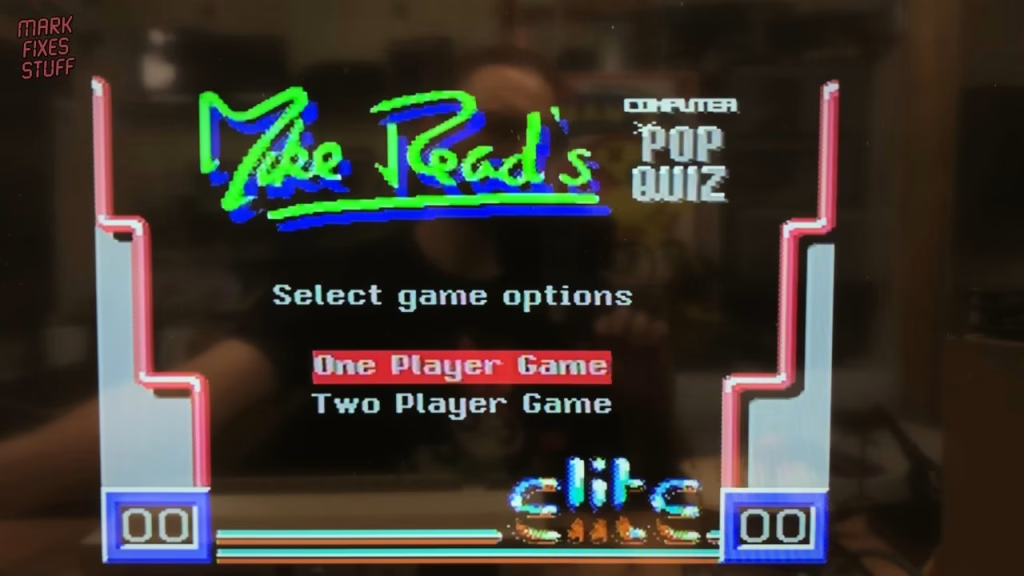
Datasette one is the master for playback, and datasettes two and three are the recording decks. I put Mike Read’s Pop Quiz in the master deck, blank C15 cassettes in the other two, and switched on. The C64 came on, so I assumed all was fine, but nothing would work, even after turning it off and on again.
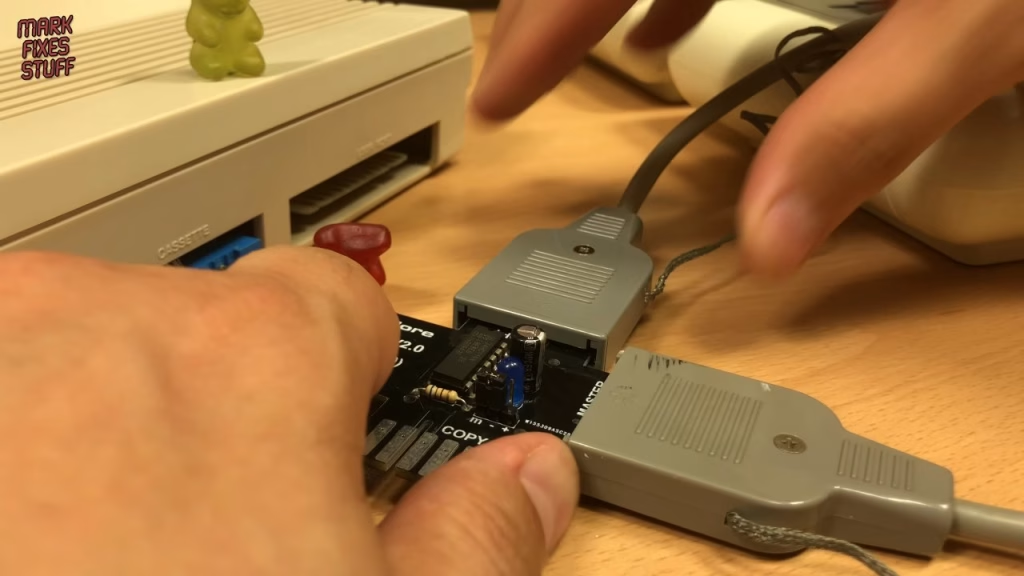
I hadn’t read the manual. In my eagerness I’d left a jumper on those header pins, but they aren’t a jumper option at all: they’re for adding external power so you can record without a C64. The rogue jumper was shorting things out, and I blew the 9V fuse in the machine. Don’t do that. Once I’d read the instructions, I removed the jumper and replaced the fuse, and no harm was done.
Did the copied tape load?
With that sorted, the pirate factory swung into action, although datasette two decided it no longer wanted to play (maybe it has a conscience). I loaded the game on the C64 while it copied, which isn’t required but is more interesting on camera. Then the moment of truth: could the counterfeit cassette load? All the indications were good. The game loaded fine, as did the question block that loads in after the initial game engine. A really fun, if fairly pointless, swashbuckling build. Did anyone have anything like this back in the 80s? Let me know in the YouTube comments.
Related
More Commodore 64 tape projects on the site: building a Tapuino virtual Datasette (part 1), Tapuino part 2 and my Epyx FastLoad cartridge build.
Leave a Reply