
Back on my feet after a week of illness in April 2020, I sat down for a one-take channel update: Patreon backers’ questions on tools, RF shields and pulling old RAM chips, a stalled Dreamcast project with Retro Man Cave, and the retro question of the week. Spoiler: my worst console is the Tiger Game.com.
What is the most basic equipment for mods and recaps?
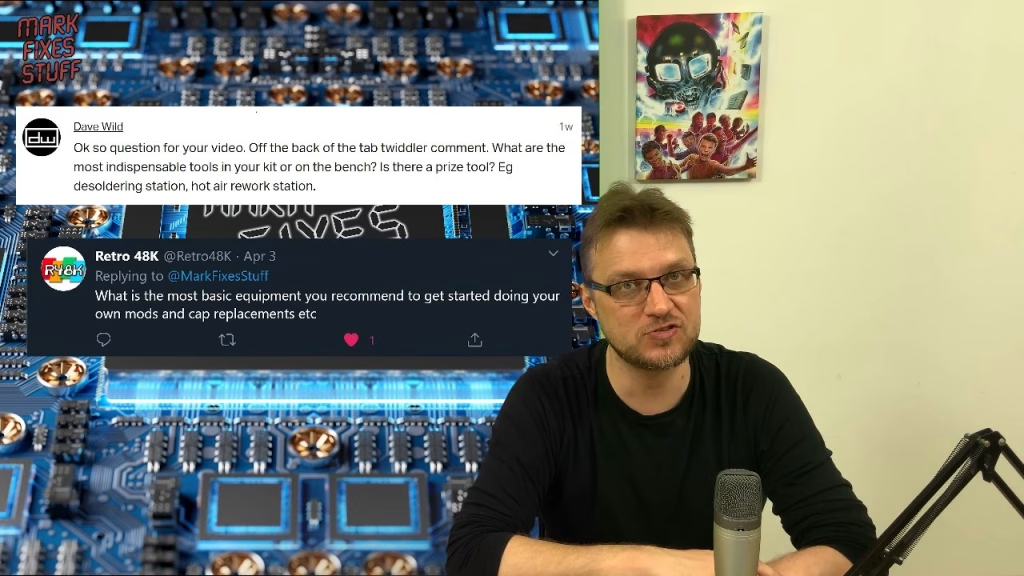
Dave Wilde asked about my most indispensable bench tools after the “tab twiddler” from my Atari Jaguar teardown, and on Twitter Retro 48K asked what you need to start doing mods and cap replacements. I had already scripted and voiced a top 13 tools video (13 because 10 was not enough), so I held most of the list back. The one tool I will name now is a temperature-controlled soldering iron. It applies more or less power to hold the tip temperature steady on big areas like ground planes, so you are much less likely to vaporise tracks.
Commodore and SMD caps
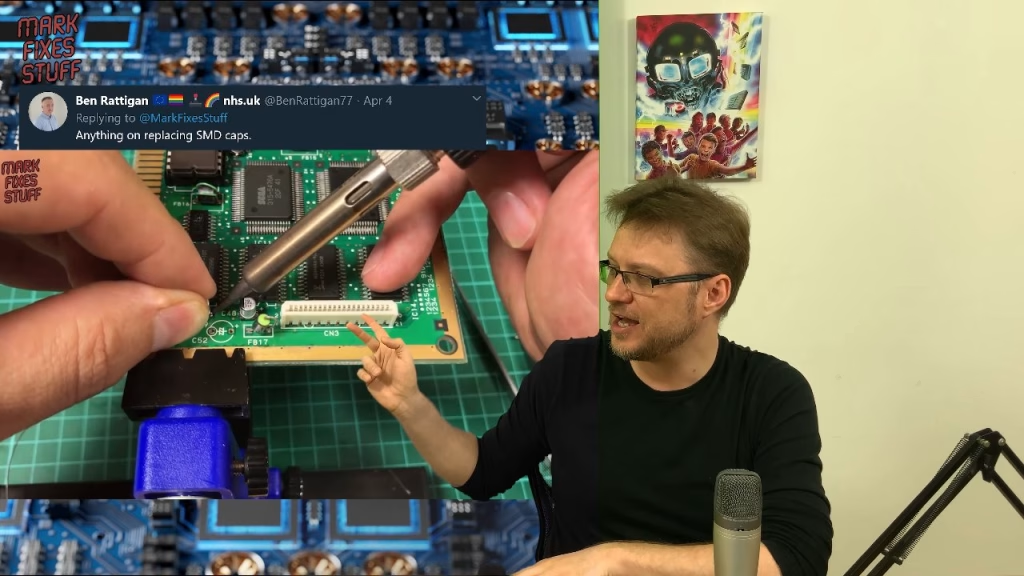
For the Commodore fans, an Amiga 500 Plus board build was planned as a three-part series, along with a very dirty boxed C64 to restore and play, an SD2IEC from The Future Was 8-bit and an Epyx FastLoad Reloaded cartridge. For SMD caps, a CD32 with a lot of leakage was waiting, and the Mega CD Retro Resurrection already showed a leaky board recap.
Worst system I have fixed: the Game.com
The Tiger Game.com developed lines on the screen, much like an original DMG Game Boy, and I did fix it. Was it worth the hassle? Not really, because the screen was so bad even when new that it is almost unplayable. It is still a piece of gaming history, though. What would I like to get inside? An Oric, a Tatung Einstein or a SAM Coupe.
Do you need the RF shields in retro consoles?
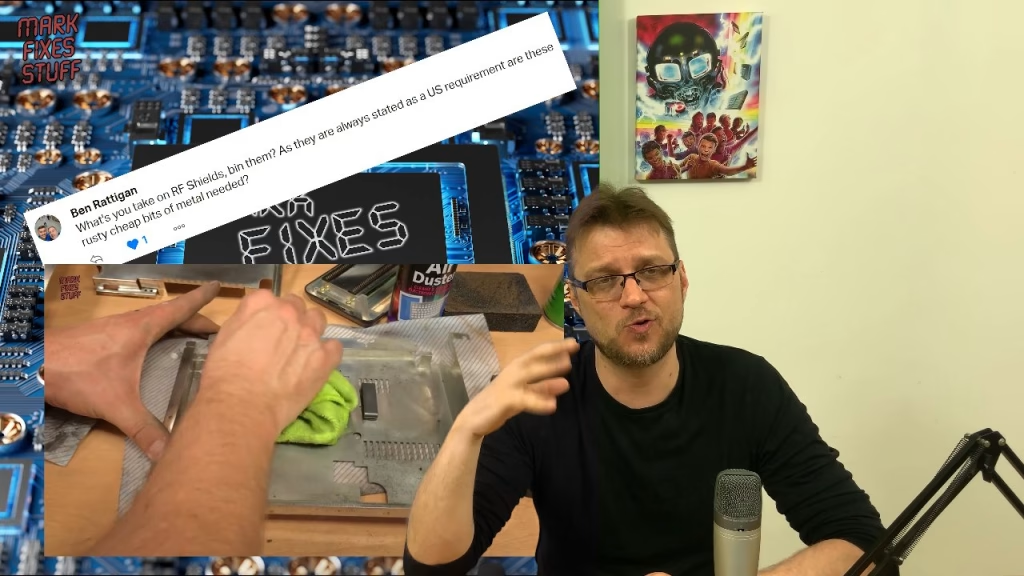
The US had much stricter rules on electromagnetic interference, which is why so much hardware has metal shielding (and why a Spectrum could not be sold there as it was). Is it needed? Not really. But I see it as part of the machine, so unless it is beyond repair it goes back in. I spent a long time getting the rusty Mega CD shielding back into usable shape for exactly that reason.
The best way to remove old RAM chips
If you are worried about damaging a delicate board (early CPC 464 boards especially), clip the legs with sharp side cutters. With the body gone it stops acting as a heat sink, so each leg stump comes out with very little heat. Even easier is a desoldering station with a gun and pump: around £80, but if you have lots of machines to do it pays for itself quickly.
A delayed Dreamcast project
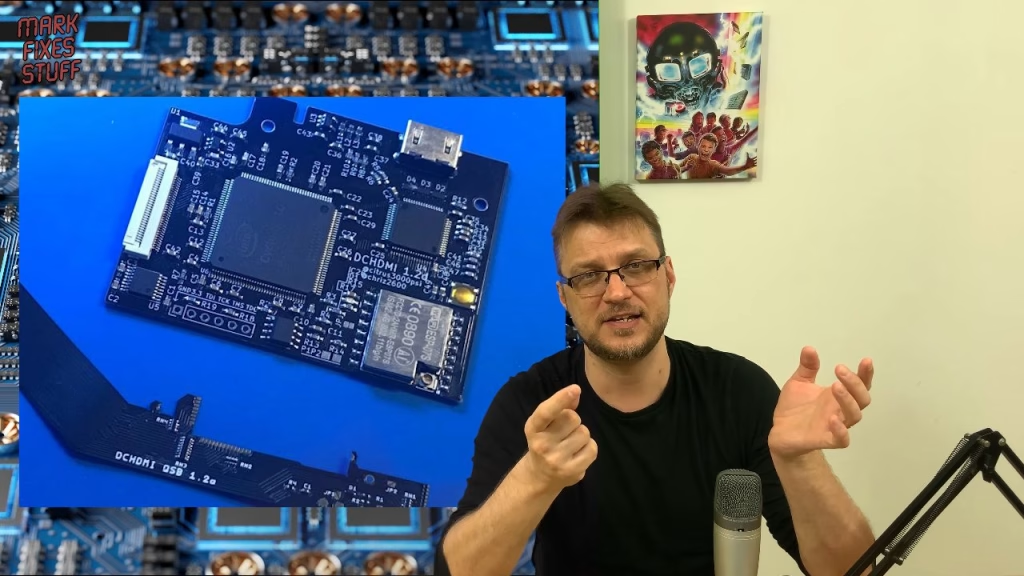
Post was slow everywhere, which delayed a planned Dreamcast upgrade series with Neil from Retro Man Cave (GDEMU, 3D printed parts from Coaster2k and a PSU replacement). AliExpress offered me a free DCHDMI, so I checked with the original creator first. It is open source, but he had seen those boards with very thin ribbon cables and fake chips that can cause problems with updates. I did not want to promote that, so he offered to send an original instead.
Retro question of the week
A: what is the worst system you have ever owned? B: if you could go back 100 years with one piece of technology (no weapons), what would it be and what would you do with it? Answers on the YouTube video, please.
Related
The tools video did arrive: my top 13 tools for fixing stuff. See also the Mega CD Retro Resurrection part 2, the Atari Jaguar cartridge slot repair and the Epyx FastLoad and SD2IEC video.
Leave a Reply