
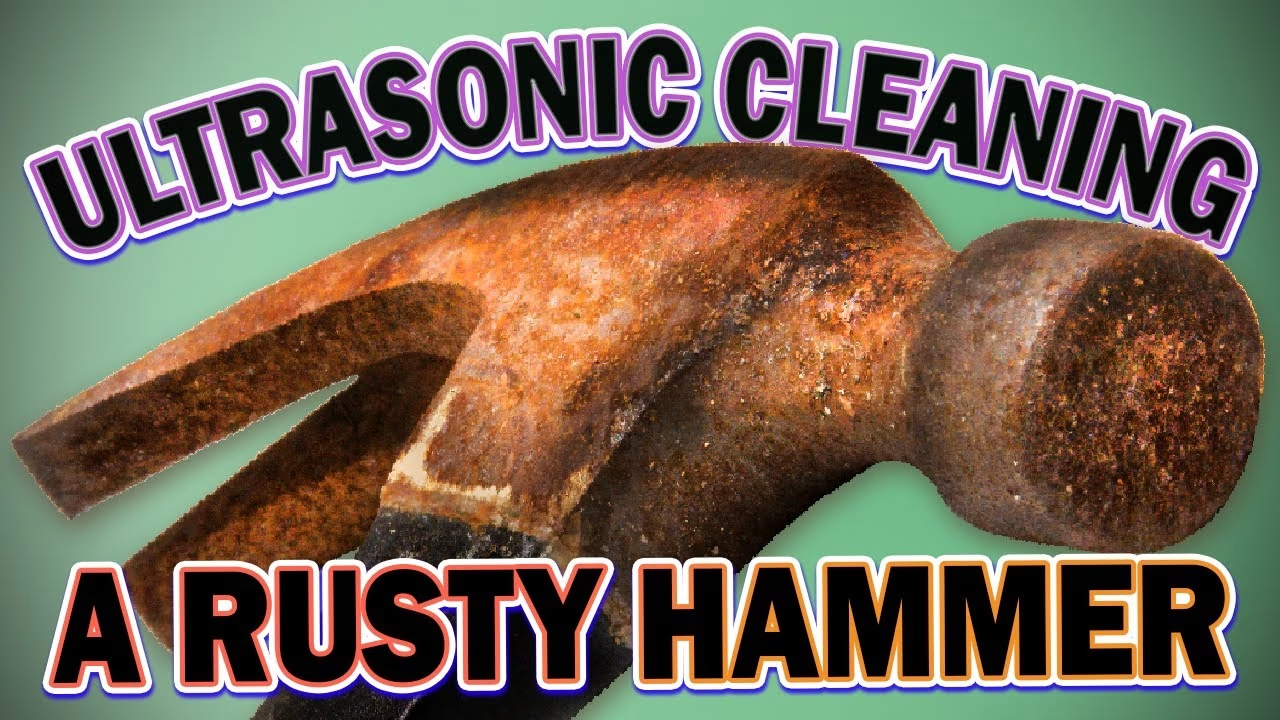
Can an ultrasonic cleaner really remove heavy rust, or is that a workshop myth? I put it to the test with a hammer I “found in the wild” (I left it in my garden two years ago), using nothing more exotic than tap water and some citric acid. It started as a slightly silly experiment, but the result is directly useful for restoring rusty metal shielding in retro consoles and computers, where sanding can make things look worse or remove material you want to keep. This video was sponsored by PCBWay.
Setting up the ultrasonic cleaner
People often ask why I don’t just throw things in my ultrasonic cleaner. The answer is that it’s chuffing huge and takes a lot of filling. Inside there’s a chip-basket style insert and a big tank that must be filled almost to the top. If there isn’t a large enough body of fluid to absorb the vibration, the transducers mounted under the tank overheat and die. I hadn’t used it in so long that it had collected its own dust bunnies, so those came out first with the bench vac, and I made sure the outlet valve was closed before filling.
Purists will say use distilled water, as it doesn’t carry tap water’s contaminants. But as soon as a rusty hammer goes in, the water’s contaminated anyway. The main difference is that degassing takes slightly longer.
Heating and degassing
This cleaner has a heater and timer. Some of the water I’d used was warm, so it started at 36°C, and with the lid on to keep the heat in it reached 50°C. As it heats, bubbles of dissolved gas form, and those get in the way of cavitation. Degassing just means running the cleaner for about 5 to 10 minutes; it’s fascinating to watch the bubbles hang suspended in the liquid.
I also found a big bag of citric acid under my workbench, bought for descaling the kettle, and I’d been told it helps ultrasonic cleaning, so I tipped a load in. Yes, I was flying by the seat of my pants. Then the basket went back in. It matters: nothing should touch the tank walls, which is why the basket has rubber feet.
Does an ultrasonic cleaner remove rust?
My expectations were low. At first not much happened, then the water around the hammer turned a dull rusty orange and rust began to lift. After about three minutes bare metal was showing, along with the 340g weight marking, and by seven minutes there was a lot of metal. The cleaning comes from cavitation: sound waves passing through the water form countless microscopic bubbles (cavities) that do the work.
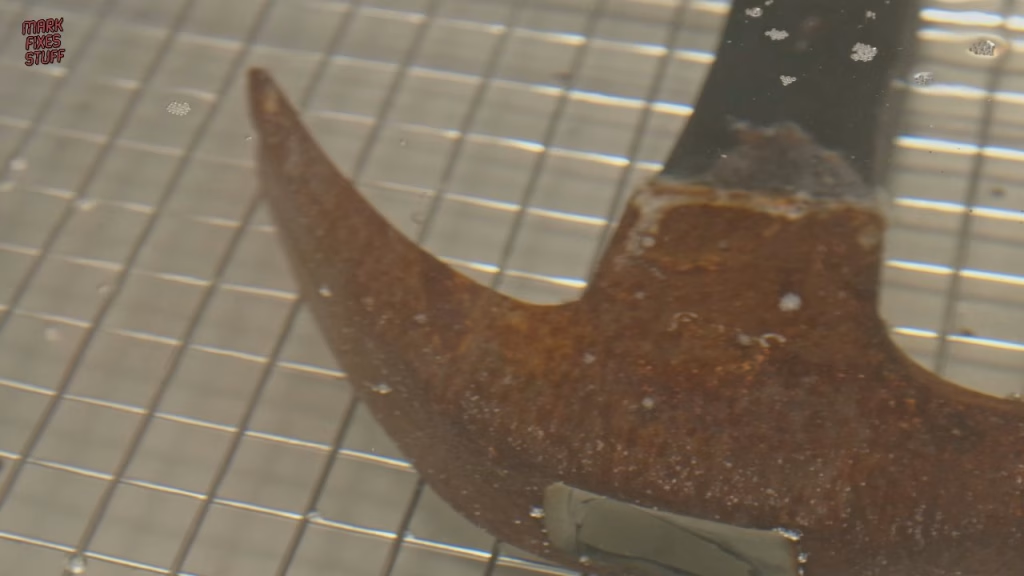
After the first ten-minute session, it was still a pretty rusty hammer, though much less rusty than before, and what remained looked permanently embedded. Impressive, but not the miracle the makers promise. For the second run I stood the hammer on its end, and whether it was the angle or not, plumes of rust started coming off in clouds. Ultrasonic cleaners aren’t quiet, so for my neighbours’ sake I called it a night and left the hammer soaking in the solution.
Switching on again the next morning had a dramatic effect. I’m not sure whether the overnight soak in citric acid loosened things so they shook off, or the solution got into the remaining rust, but after around 37 minutes of ultrasonic cleaning in total, plus the soak, I took it out.
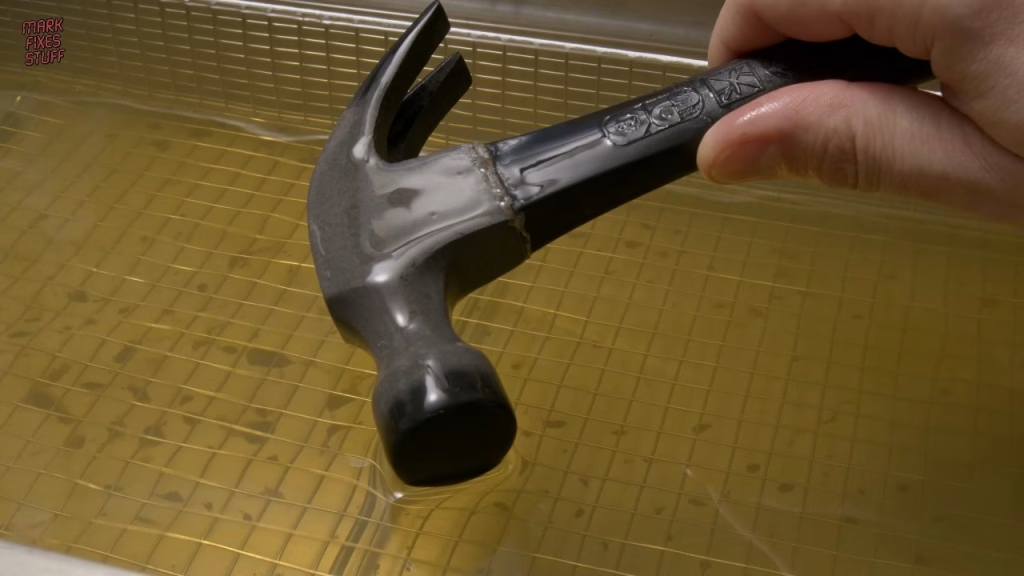
The result: rust free, if not shiny
I was frankly shocked. The hammer isn’t shiny, but all of the rust has gone, even out of the nooks and crannies I couldn’t see into before. Some areas of the metal look different, which I assume is down to hardening or heat treatment, and there seems to be some kind of surface coating. Does anyone know why the tip is a different colour? Answers in the YouTube comments, please.
Polishing it up
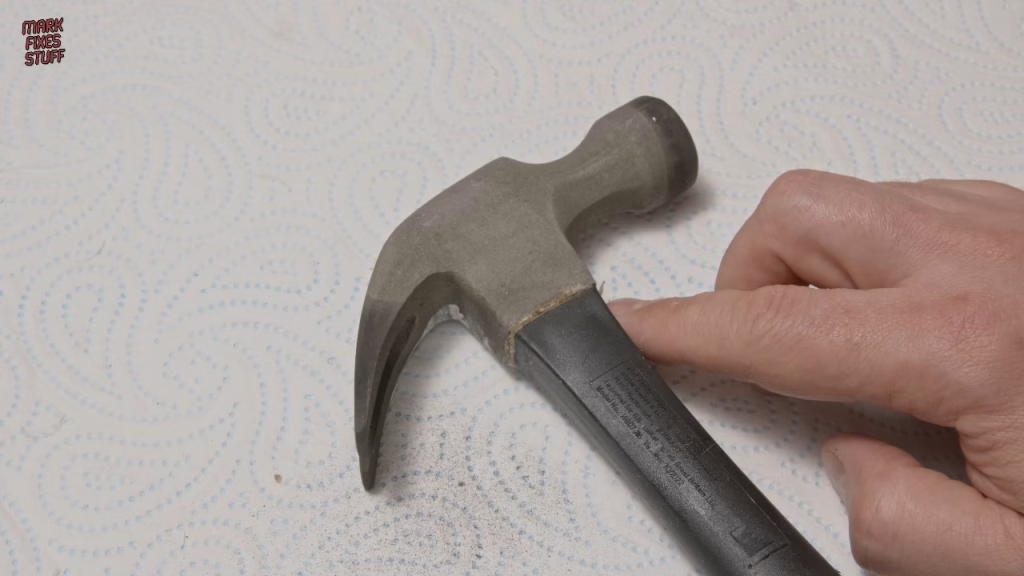
Of course I had to polish it. A hard, gritty rubber polishing bit in the Dremel started brilliantly, until its top layer wore away and I was just drawing rubber all over the hammer. Next came the all-purpose metal polish I’ve used on the shielding inside a Mega CD and parts of my Tatung Einstein. I forgot to let it dry to a haze, but where I polished it came up really well. I also melted a bit of the handle. Whoops.
Verdict
This was a £4 hammer from a budget supermarket, but experiments on low-value items like this hone my skills for more precious things. I never would have believed an ultrasonic cleaner could make such a difference with just tap water and citric acid. The rust removal was frankly incredible, and it’s given me ideas for the rusted parts on consoles and computers waiting on my bench.
Related
See metal polish on real retro hardware in the smashed Mega CD clean and rebuild, more cleaning experiments in de-yellowing an Amiga tank mouse, and corrosion clean-up in the Amiga A501 battery leak repair.
Leave a Reply